Why do we pick British suit fabrics?
Updated: Apr 23
We have over 1,000 fabric swatches (and access to thousands more), the vast majority produced in mills in Italy and the United Kingdom. These collections include cashmere woven in the idyllic English countryside, ultrafine merino wool from mills overlooking the shores of Lake Como, tweeds handspun in cottages near waves crashing on the rugged isles
of Scotland, and Biella’s trademark blends of wool, silk, and linen. All this variety is a great thing in general; everyone can find a fabric they love, even if it’s like looking for a needle in a haystack. However, we also have to face the reality that no closet will ever be big enough to hold all our favorite fabrics. So how does the Mathias team narrow down the overwhelming options when it’s time to add a new suit to the rotation?
There are a number of factors to consider when choosing a fabric. Each has its own unique set of properties that have to be taken into account to match your needs and preferences. A flannel suit would be terrible for a Miami vacation, but perfect for a winter holiday party in New York. Designing a suit isn’t just a theoretical exercise. Each client has a particular use in mind, whether it’s a beach wedding, business travel, or formal gala. Based on our needs, we usually find ourselves reaching for the books of British fabrics to make our own suits. Here’s why.

Seattle and London have similar climates, with warm, dry summers, mild winters, and lots of grey drizzly days in between. This means that British fabrics are intentionally crafted for weather conditions a lot like our own, giving us a range of practical options for every season: lightweight wools for spring and summer, heavier worsteds in the fall, and thick woolens for winter.
The UK traditionally divides their wardrobes between town and country clothes. In the city, they’re wearing full suits in shades of grey, navy, and black, maybe with subtle pinstripe or herringbone patterns. For weekends in the country, gentlemen would switch to colors like brown, olive, and green. Heavier fabrics and stronger patterns give outfits a more casual feel. We certainly don’t live like aristocrats, but we do love the idea of separating work and leisure–both mentally and visually–while still dressing well.
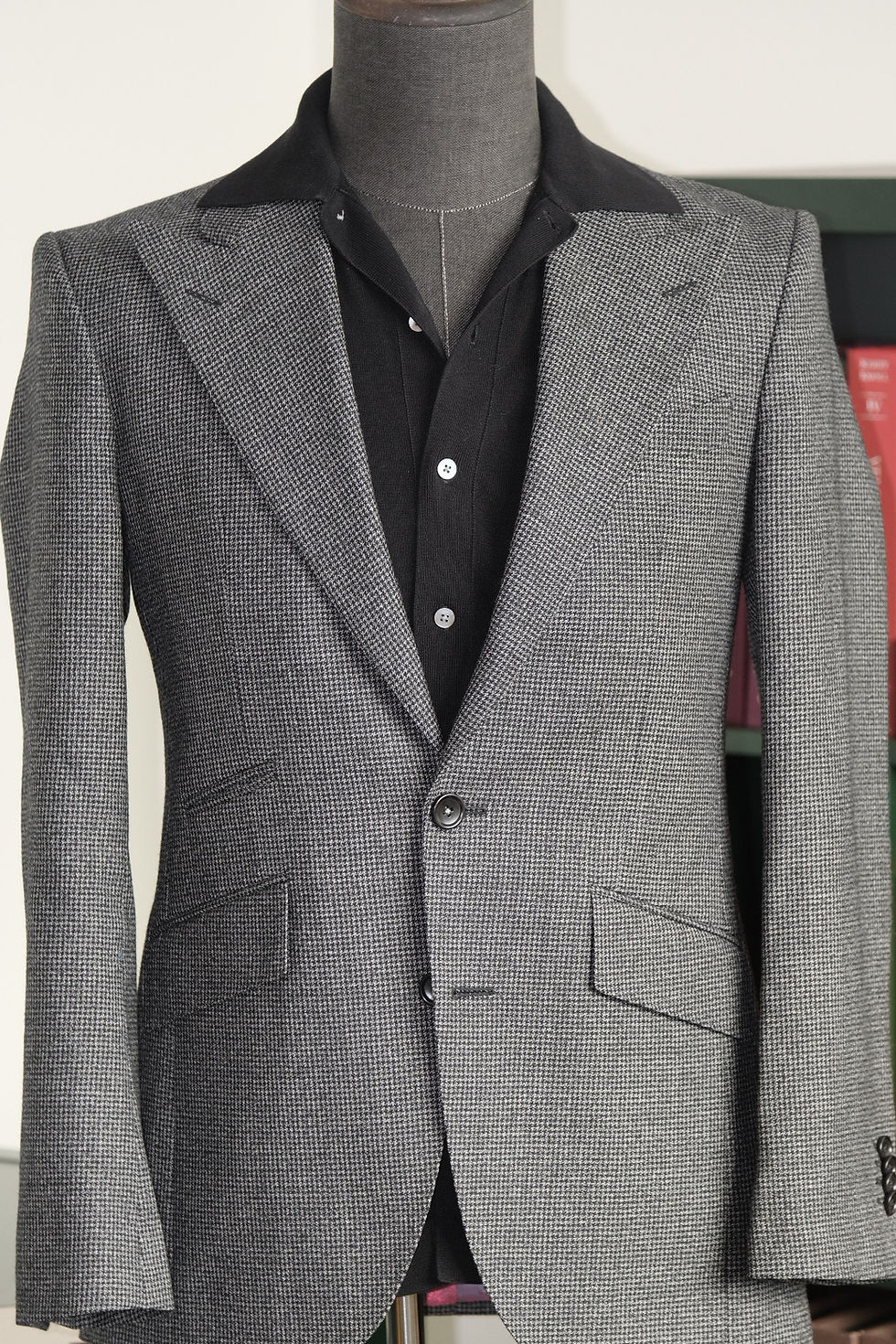
Think of the characteristics of a stereotypical Englishman: sophisticated, intellectual, stoic, industrious. Contrast that with the common imagination of Italians as passionate, epicurean, and valuing beauty over utility. These traits carry over to their respective fabric preferences as well. A suit made from British fabric is crisp and structured, an impeccably tailored suit of armor protecting the dignity of its wearer. Italian fabrics are usually softer, thinner, more vibrant, with unmatched depth. They’re made to be crafted into unstructured jackets that lightly flutter in the Mediterranean breeze, quite the opposite of a suit constructed to withstand the wind, rain, and whatever else it might be exposed to on the streets of London.
Neither sartorial perspective is right or wrong, of course, and both hold great influence in modern tailoring. There are plenty of excellent examples of these aesthetics in fashion magazines and shop windows to provide inspiration. The choice of style will influence the fabric selection and vice versa. The visual effect of a Neapolitan suit, with its soft hand-pleated shoulder and relatively relaxed fit, will be enhanced by a lightweight fabric with a gentle drape. We find ourselves drawn to sharper silhouettes and clean lines; British fabrics are simply better suited to the purpose.
The most expensive fabrics in our collection are made in Italy, which isn’t a surprise. It’s the result of the Italian affinity for the finer things (in this case, cashmere, silk, alpaca, and vicuña) combined with exclusivity. Italian labels are synonymous with luxury and high fashion. Names like Loro Piana, Zegna, and Cerruti. British mill labels like Dugdale, Huddersfield, or Marling & Evans just don’t have the same spotlight on them even though they’re certainly deserving. The fact that British textiles also tend to have a firmer hand adds to the perception that they aren’t as luxurious as the Italian versions. Here’s the catch though: ultrafine fabrics are much more delicate, so you’re trading longevity for extravagance. The Brits offer a different value proposition, favoring dependability and practicality in the long run. We’re wearing our suits on a regular basis in a variety of conditions, so durable, low-maintenance fabrics are a wise investment for us.
If all these reasons for choosing British fabrics seem subjective and based on our own personal taste, you’re absolutely right. In fact, that’s the whole point. We know which qualities we prioritize and how to pick an appropriate fabric to meet our needs. Our job is to do that for you, too. It doesn’t matter how much you know about measuring wool’s Super number or whether a 2-ply or 6-ply yarn will be more wrinkle-resistant. Just tell us what’s important to you and we’ll take it from there.