Fabric, Fit, and Features: The Woolly Trinity
Updated: Apr 23
We get asked all the time, “Designing a suit from scratch is really overwhelming, how are you guys so damn good at it?” The answer lies in understanding how individual components relate to each other and form a cohesive whole. Certain details work better when matched with complementary features, and worse when they clash. An easy example: a canary yellow linen is always going to be an inherently casual fabric. Trimming it as a tuxedo, with black silk lapels and a sharply tailored fit, would get some strange looks at any black tie event. Imagine that same fabric, though, as a casual summer jacket: a loosely flowing silhouette, patch pockets to hold a pair of sunglasses, and breezy unlined construction. The difference here is fairly intuitive, but what about more nuanced situations?
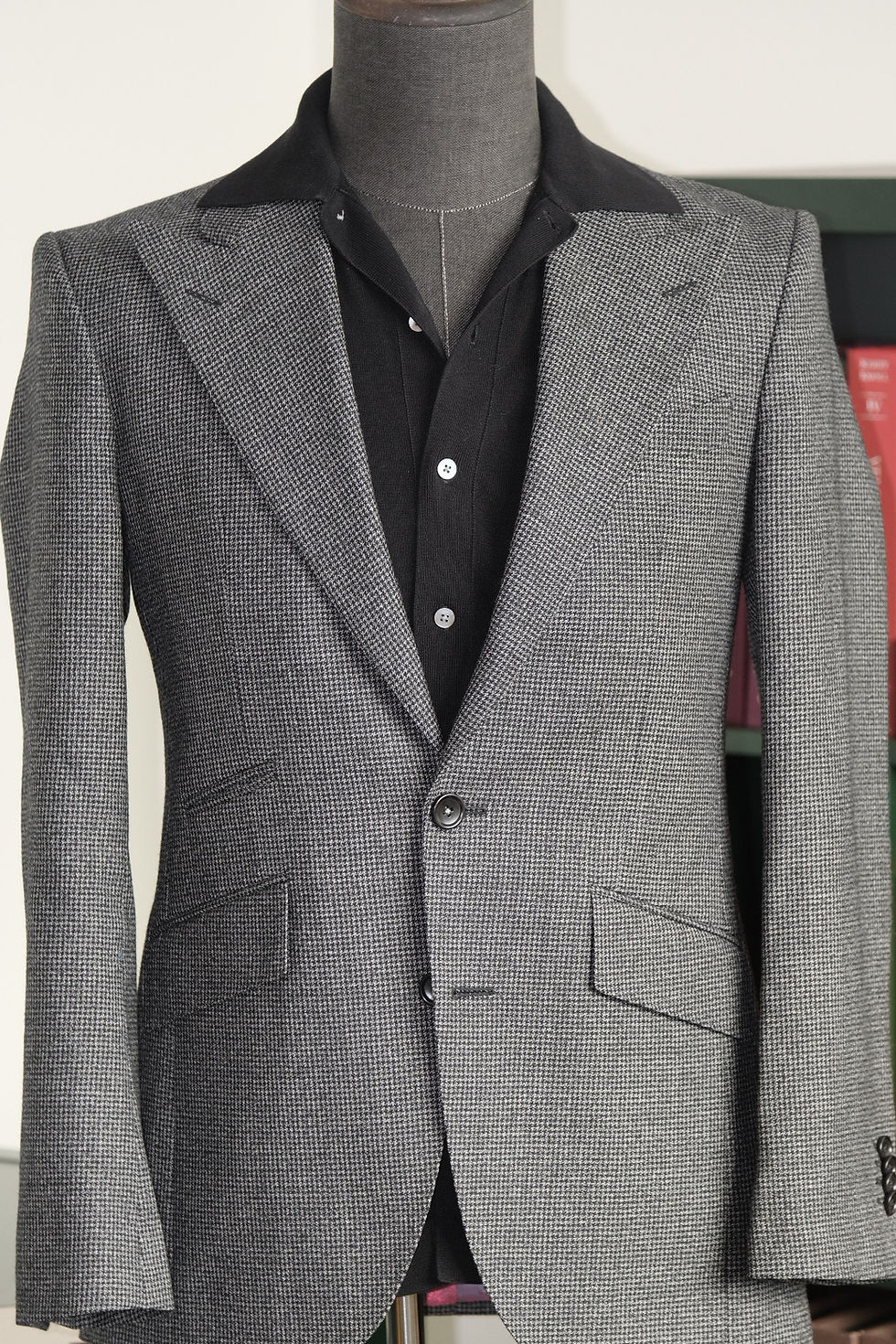
Suit design can be boiled down to balancing three primary elements: Fabric, Features, and Fit. We’ve been calling this the Woolly Trinity until we can come up with a better (or worse?) pun. Here’s a breakdown:
Fabric
We always start by choosing a fabric because that will largely dictate how to decide the fit and features. Formality roughly lies on a spectrum. Dark, solid, and smooth pure wool is best treated as a very formal option. On the other end of the spectrum, you’ll find light colored, patterned, heavily textured fabrics made from linen, cotton, or a variety of seasonal blends.

The fabric selection should be guided by the intended use for the suit. A business meeting, beach wedding, awards gala, or date night will each lead to very different fabric choices, and from there to different styling choices. There are a couple ways to approach the initial fabric selection. Often there will be a specific occasion and some predetermined ideas about what the suit should look like. A light grey suit to coordinate with a wedding’s color palette, for example. From there, a client might consider light grey fabrics in pure wool or a wool silk blend, solid or patterned, smooth or textured. If the suit is just for general use, it can be fun to work more spontaneously: flip through swatch books until a particular fabric catches your eye, and then come up with a design to emphasize the qualities of that cloth.
Features
Visual features like pockets, lapels, and buttons define the look of the suit, while functional features like the lining, canvas, or belt loops affect its practical use. Aside from some classic rules worth following–no notch lapels on a tux–many of these details are subjective. This is where personal taste, the suit’s purpose, and sartorial tradition all combine to guide the myriad choices to be made. It’s easy for two people to start with the same fabric selection and end up designing two very different suits that both look great. That’s the whole point of choosing a custom suit in the first place. However, it’s also entirely possible to mix features in a way that’s incongruous and odd. How do we make sure the options being chosen will all work together?
First, it’s helpful to group certain details: if you pick one, then it’s smart to pick the other features in that group too. For example, a double-breasted suit always looks best with peak lapels instead of notch. An extra-wide peak lapel will create the illusion of a broader shoulder and narrower waist, which helps keep the jacket from looking too rectangular. Slanted pockets also slim the waistline by drawing the eye down and away from it. A straight legged trouser with a cuff visually balances the double-breasted jacket so that overall the suit doesn’t seem top heavy. See how that works? Choosing a double-breasted jacket naturally led us to several complementary features, streamlining the whole process.

Just as fabrics lie along a formal-–casual spectrum, so do features. This doesn’t mean every single detail has to fall on the exact same point of the spectrum, because a suit is more than the sum of its parts, but it’s important to be mindful of how each feature can push the suit toward formality or toward casualness. As a rule of thumb, minimalism is formal. A single-breasted suit in a dark solid color, tonal buttons and lining, jetted pockets, and classic proportions would be appropriate for a traditional wedding, funeral, or business event.
While we absolutely encourage clients to pick features that reflect their individuality, it’s important not to get carried away. A flashy detail can work better if it stands out rather than getting lost in a bunch of visual clutter competing for attention. I generally prefer to let one or two aspects of the suit draw focus while the rest fade pleasantly into the background. A bold plaid is enough on its own; adding all the quirkiest trimmings would make you look like a clown. By all means, personalize your suit with a fun lining or an accent stitch on the buttonholes. Just show some restraint.
Fit
A refined fabric and elegant design are obviously worthless if the suit doesn’t fit, but I’m using the word here to refer to the overall silhouette of the suit. The cut of a suit says a lot about the impression it’s intended to make, as well as the style of its wearer. Here, again, it’s important to think about how the fit relates to the fabric and features–but fit is also the most interesting way to make whatever statement you’d like to make. Trends in tailored clothing come and go more gradually and in more subtle ways than in the fashion industry broadly, but there are distinct differences in cuts that pin a suit to a particular era or aesthetic.
For versatility’s sake, a classic middle-of-the-road fit can’t be beat. It’s comfortable, professional, flatters any body type, and won’t attract undue attention. Neither overly skinny nor loose, long nor short, a suit in this type of cut will have a timeless quality. If trends change (and trust me, they will) a classic suit won’t look dated. This is ideal for a suit that you’ll only pull out of the closet on special occasions because it will still be useful for years to come.
The huge popularity of the show Mad Men swung the fashion pendulum away from baggy, long suits and toward a much slimmer fit, reviving the cuts worn in the mid-1960s. Trousers and sleeves became aggressively tapered and noticeably shorter. Jacket waistlines and lapels narrowed as well. Before long, the slim-fit trend reached the point of absurdity, with painted-on trousers that had to be made with elastic to even be wearable. The skinny fit has almost entirely fallen out of fashion, and we say good riddance.
In the post-covid, work-from-home world, comfort has become priority number one. That means softer materials, less structure, and wider fits. If that’s not your default image of a suit, you’re not alone. Many obituaries for the suit were written, but they turned out to be premature. Tailored clothing has been able to adapt and even thrive in this new sartorial environment. Staid brands that couldn’t keep up died off, leaving space for dynamic, youthful companies to innovate. High-end retailers led the way, combining quality fabrics and handcrafted tailoring with gracefully flowing silhouettes and muted colors. These ideas quickly trickled down throughout the clothing market. What does all this mean for us? For starters, a suit can be damn near anything you want it to be. A crisply tailored navy suit with a shirt and tie projects one image, while a white flannel double-breasted suit with wide legged trousers and a polo says something entirely different–and these suits can hang side by side in the same closet.
When wearing a suit becomes a choice instead of a requirement, why not get more creative with it? A casual suit in a nontraditional fabric might as well be made in a comfortable fit. On the other hand, a classic wool–the kind that you’d see in any boardroom–made into a loose, unstructured, informal suit becomes almost transgressive. Both suits indicate that the wearer is aware of societal expectations regarding clothing, and intends to follow them. They’re just following the rules on their own terms. Our goal is to share our expertise with our clients so that they, too, can dress on their own terms.